 Annual
Reports for Experimental Group on Condensed Matter Physics
Annual
Reports for Experimental Group on Condensed Matter Physics
(Japanese version)
Home
Page for Institute of Physics/Doctoral Program in Physics

Annual
Reports for Experimental Group on Condensed Matter Physics
(Japanese version)
Home
Page for Institute of Physics/Doctoral Program in Physics
A wide variety of experiments on condensed matter physics are being carried out using state-of-the-art technology. We are investigating novel phenomena in 3d transition-metal oxides and bronzes, semiconductor quantum structures, metal nano-structures, liquid and solid helium and superconducting materials. Various surface phenomena and high-resolution spectroscopy of molecules are also studied. Nanometer fabrications of semiconductors and their optical study are done by the research group of NEC.
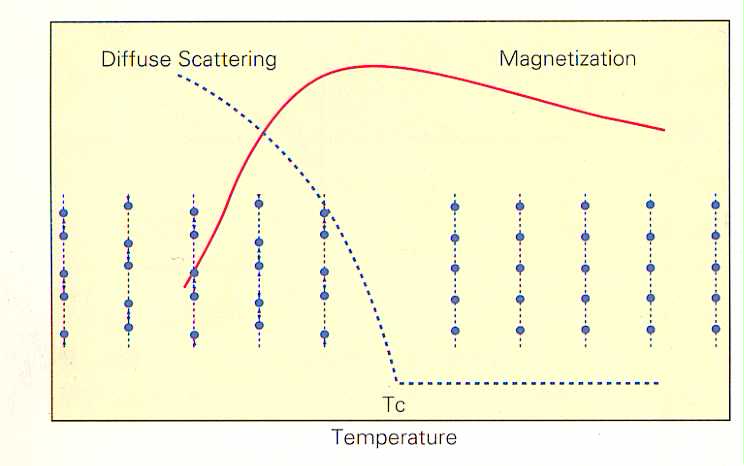
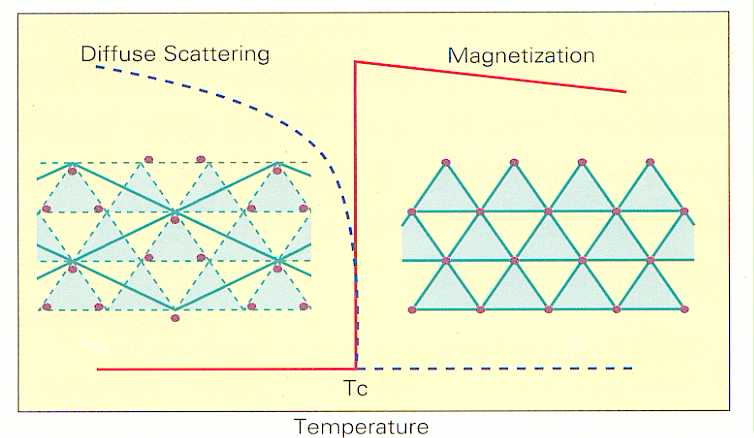
1. Mechanisms of Phase Transitions and Electronic Transports in Transition Metal Oxide Systems
Transition metal oxide systems have various properties,
such as metal-insulator transition, high transition temperature superconductivity,
or magnetic-nonmagnetic transition. These originate from the crystal structures.
The mechanisms of phase transitions and electronic transports in the systems
have been studied from the structural and electronic viewpoints by using
x-ray four-circle diffraction, magnetic resonance and so on.
 Return to top
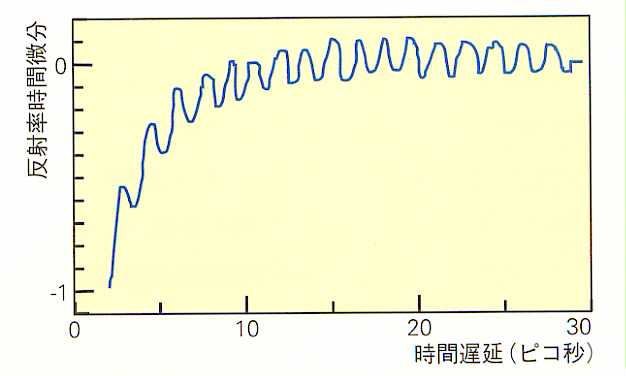
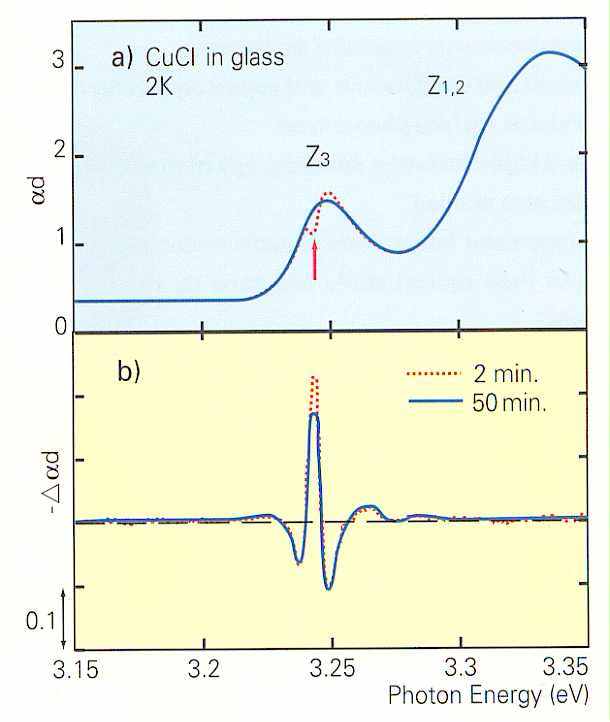
2. Optical Physics of semiconductor Quantum structures
Modern laser technology enables us to generate ultrashort light pulses (femtosecond time scale) and extremely narrow band llght. We are studying the novel phenomena in semiconductor quantum structures using these state-of-the-art laser sources.
 Return
to top
Return
to top
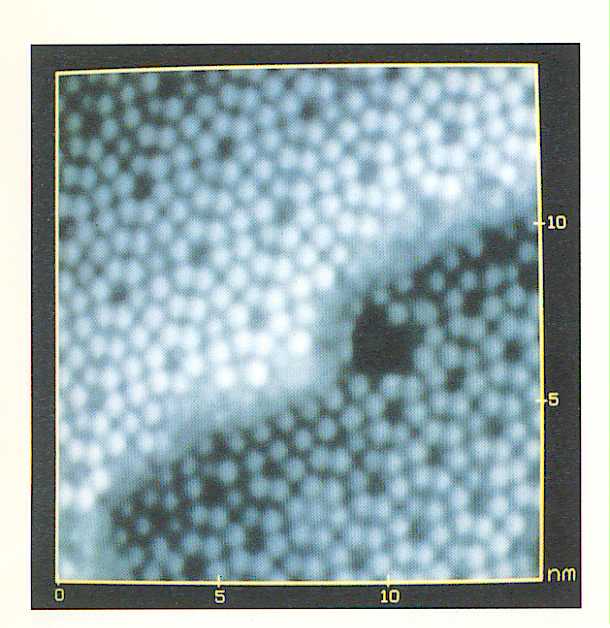
Surface phenomena such as reconstruction, phase transition, atom transport and chemisorption are investigated by using a scanning tunneling microscope (STM). Angle-resolved photoemission is also employed.
 Return
to top
Return
to top
High-resolution photoelectron spectroscopy using synchrotron radiation provides basic knowledge on molecular constants of various molecules such as atmospheric gases and rare gas clusters.
 Return
to top
Return
to top
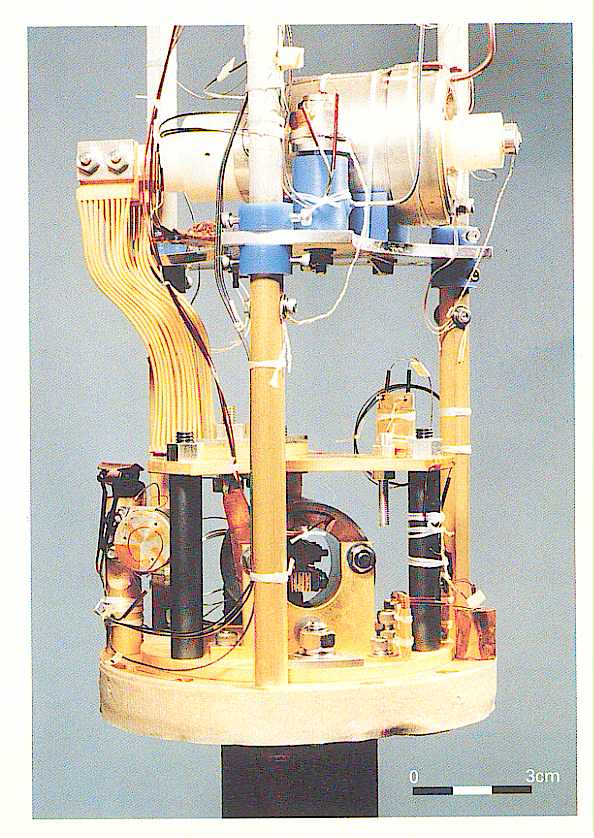
We are currently studying 2D nuclear magnetism and possible 2D superfluidity in 3He thin films adsorbed on various substrates to elucidate dimensional effects in quantum fluids and solids. The experiments are being carried out at temperatures down to 10-4K achieved by the nuclear demagne tization refrigerator.
6. Studies of Superconductors by Scanning Tunneling Microscope
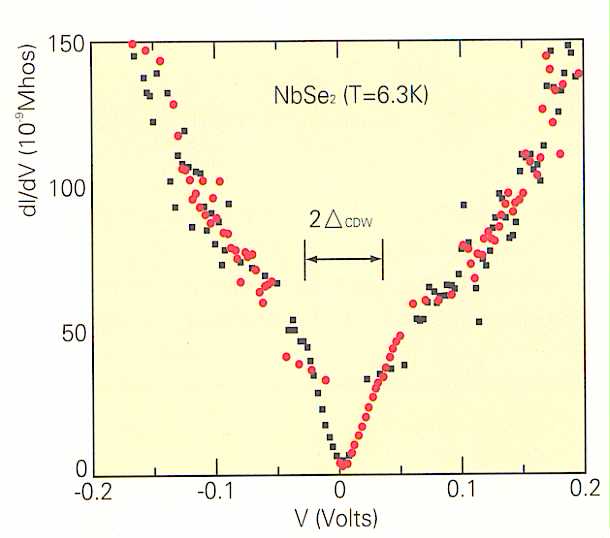
Studies of energy gaps and vorlex lines in superconductors and of low dimensional conductors which exhibit the charge density wave transitions are under way using a low-temperature scanning tunneling microscope(STM). We are also developing an ultra-low temperature STM, which works at 10-2K, to apply to experiments on heavy fermion superconductors.
 Return
to top
Return
to top